Indianapolis · Marion County · Central Indiana
Radon mitigation in Indianapolis, done from measurement outward
Marion County sits in EPA Radon Zone 1, where indoor levels above the federal action level are common enough that testing is the only way to know where a house stands. We test, design reduction systems around how your foundation actually behaves, and verify the result afterward.
- EPA action level
- 4.0 pCi/L
- Marion County zone
- Zone 1
- Short-term test
- 48+ hrs
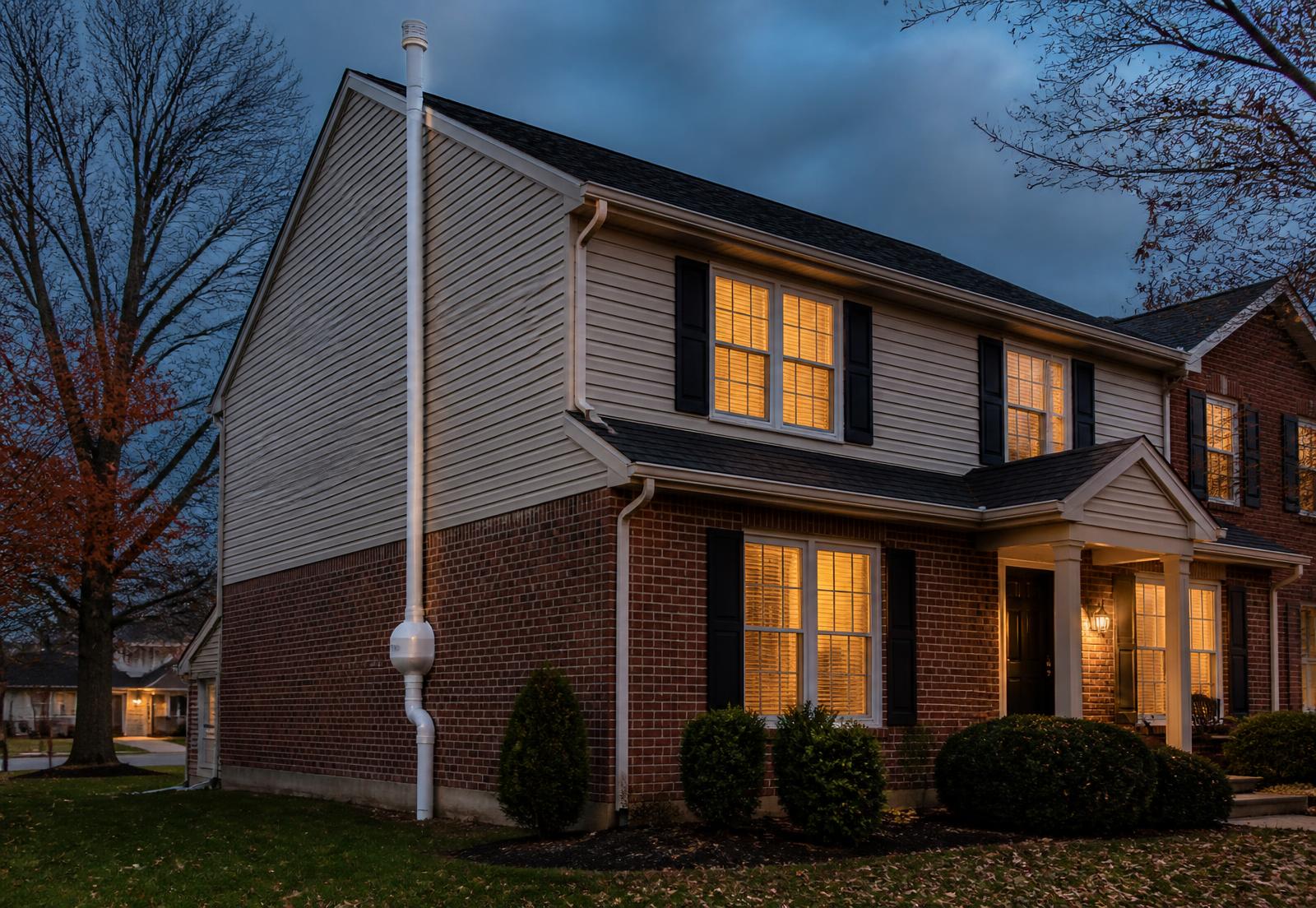
Field note
Exterior riser routing keeps the fan outside conditioned space and puts the exhaust above the eave, where soil gas disperses rather than re-entering through upper windows.
Three things a radon company has to get right
Radon work goes wrong in predictable ways: a test run under the wrong conditions, a system sized by habit instead of measurement, or an installation nobody checks again for a decade. Each of those is avoidable.
Measure first
Testing under proper closed-house conditions, using short-term devices, continuous monitors or long-term detectors depending on what the result has to support.
Radon testingReduce properly
System design driven by diagnostics rather than habit: suction point placement, communication testing under the slab, sealing, and correct fan selection for the pressure the house needs.
Radon mitigationKeep it working
Systems age. Fans wear, manometers drop, seals fail and additions change airflow. Service, fan replacement and retesting keep a system doing the job it was installed to do.
System service
Services
Where most Indianapolis projects start
Radon Mitigation Indianapolis
Custom-engineered sub-slab depressurization systems built for Indianapolis basements, crawl spaces and slab foundations.
Read moreRadon Testing Indianapolis
Accurate short-term and long-term radon testing across Indianapolis homes, using closed-house protocol and calibrated equipment.
Read moreRadon Remediation Indianapolis
End-to-end radon remediation for Indianapolis properties with elevated results: evaluation, system work and verification retesting.
Read moreRadon System Installation
Careful, code-conscious radon system installation with attention to pipe routing, electrical work and finished appearance.
Read more
The testing process
A result is only as good as the conditions it was measured under
Most disputed radon results trace back to the test itself rather than the house. A door propped open during a showing, an HVAC system switched off, or a device placed beside a sump can move a reading enough to change a decision.
How radon testing works- 01
Set the conditions
Windows and exterior doors stay closed, HVAC runs normally, and whole-house fans stay off for at least 12 hours before the test begins and throughout the measurement period.
- 02
Place the device correctly
Placement goes in the lowest level suitable for occupancy, away from exterior walls, drafts, sumps and heat sources, at a height that reflects the breathing zone.
- 03
Run the measurement
Short-term tests run a minimum of 48 hours. Continuous monitors log hourly readings, which reveals whether conditions were disturbed during the test window.
- 04
Interpret against the action level
Results are compared against the EPA action level of 4.0 pCi/L, with the EPA also advising that reduction be considered between 2 and 4 pCi/L.
- 01
Foundation diagnostics
We look at slab condition, sub-slab material, drain tile, sump configuration, crawl space area and how the levels of the house connect before proposing anything.
- 02
Communication testing
A test hole and vacuum check show how far suction actually extends beneath the slab. That measurement determines how many suction points the house genuinely needs.
- 03
System design and routing
Pipe routing balances performance against how the finished job looks, whether that means an interior chase through a closet or a discreet exterior riser.
- 04
Installation and sealing
Suction pits are excavated, penetrations sealed, the fan set outside conditioned space, exhaust terminated above the eave, and a manometer installed so you can read system status.
- 05
Post-mitigation verification
A follow-up test confirms the reduction achieved. Without it there is no objective evidence the system did what it was designed to do.
The mitigation process
Systems designed around the foundation in front of us
Two houses on the same Indianapolis street can need different systems. Sub-slab material, drain tile layout, how a basement was finished and whether an addition sits on its own slab all change what will actually work. Installations follow the mitigation standards used for certification through the National Radon Proficiency Program (NRPP).
How radon mitigation worksAfter an elevated result
A high reading is a starting point, not an emergency
Radon risk accumulates over years of exposure, so a single elevated short-term result calls for a measured response rather than panic. The EPA describes 4.0 pCi/L as the level at which action is recommended, and suggests considering reduction between 2 and 4 pCi/L as well.
What to do after a high result- Confirm the test conditions were valid, particularly during a real estate inspection window.
- Decide whether a confirmatory short-term test or a longer-term measurement fits your timeline.
- Have the foundation evaluated so any proposal is based on diagnostics, not a standard package.
- Install the system, then verify with a post-mitigation test rather than assuming success.
Central Indiana housing stock
Foundation type decides almost everything
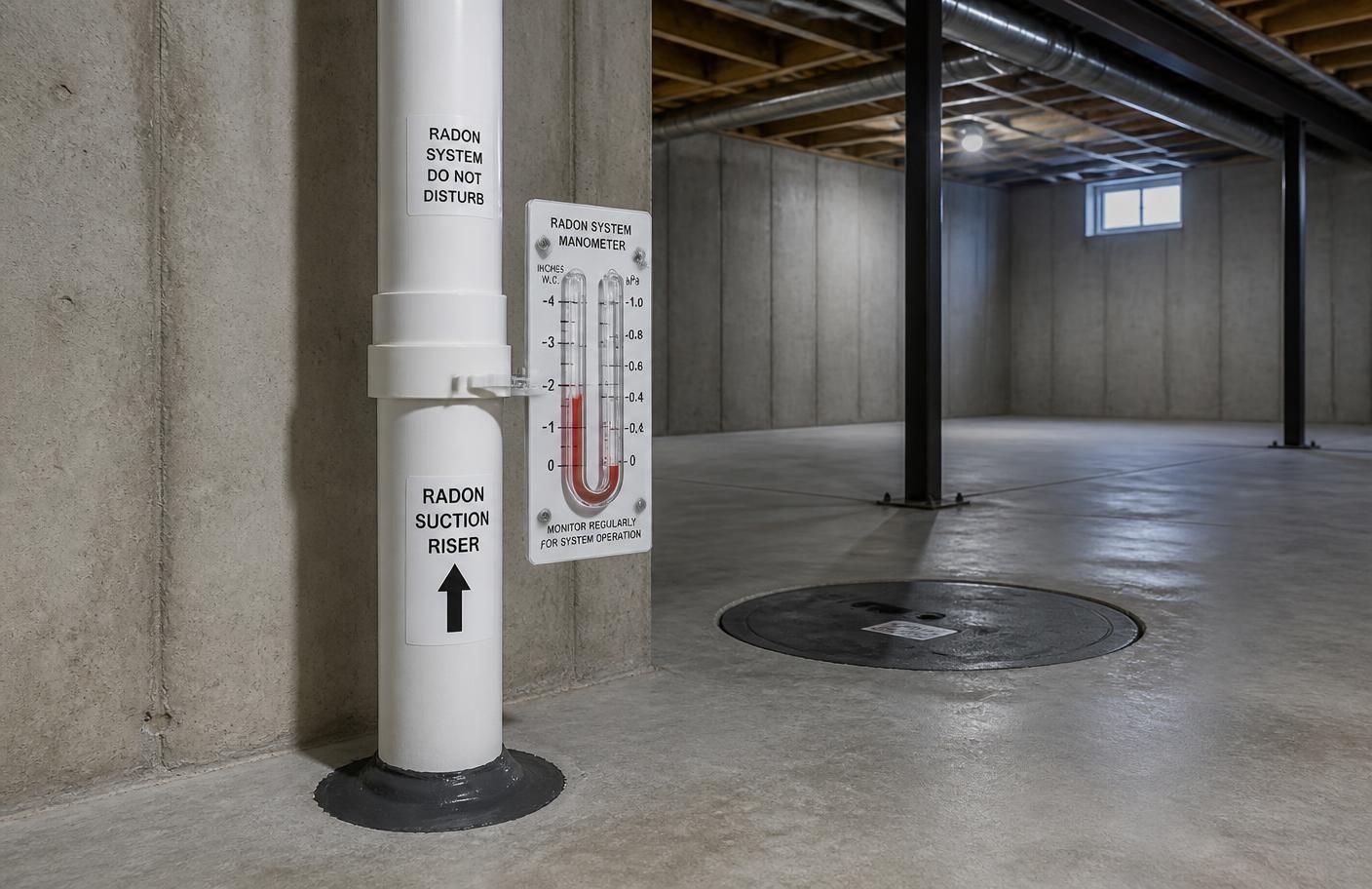
Full basements
The dominant foundation across Marion, Hamilton and Johnson Counties. Poured and block walls, perimeter drain tile and open sump pits all influence where suction points land and what has to be sealed.
Read more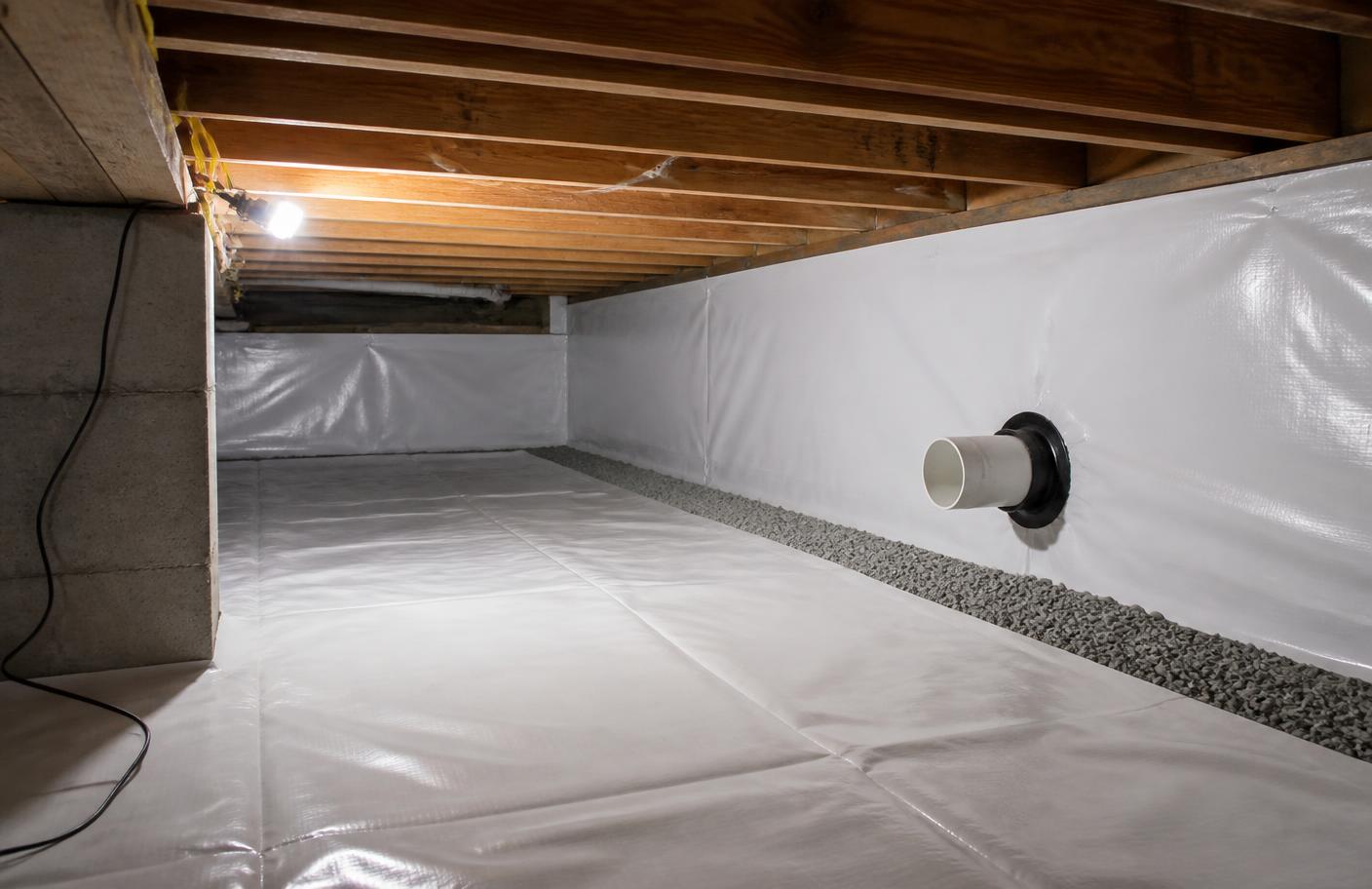
Crawl spaces
Common in older Lawrence, Speedway and Zionsville housing. Sub-membrane depressurization seals a barrier to the walls and piers, then draws soil gas from beneath it rather than from the living space.
Read more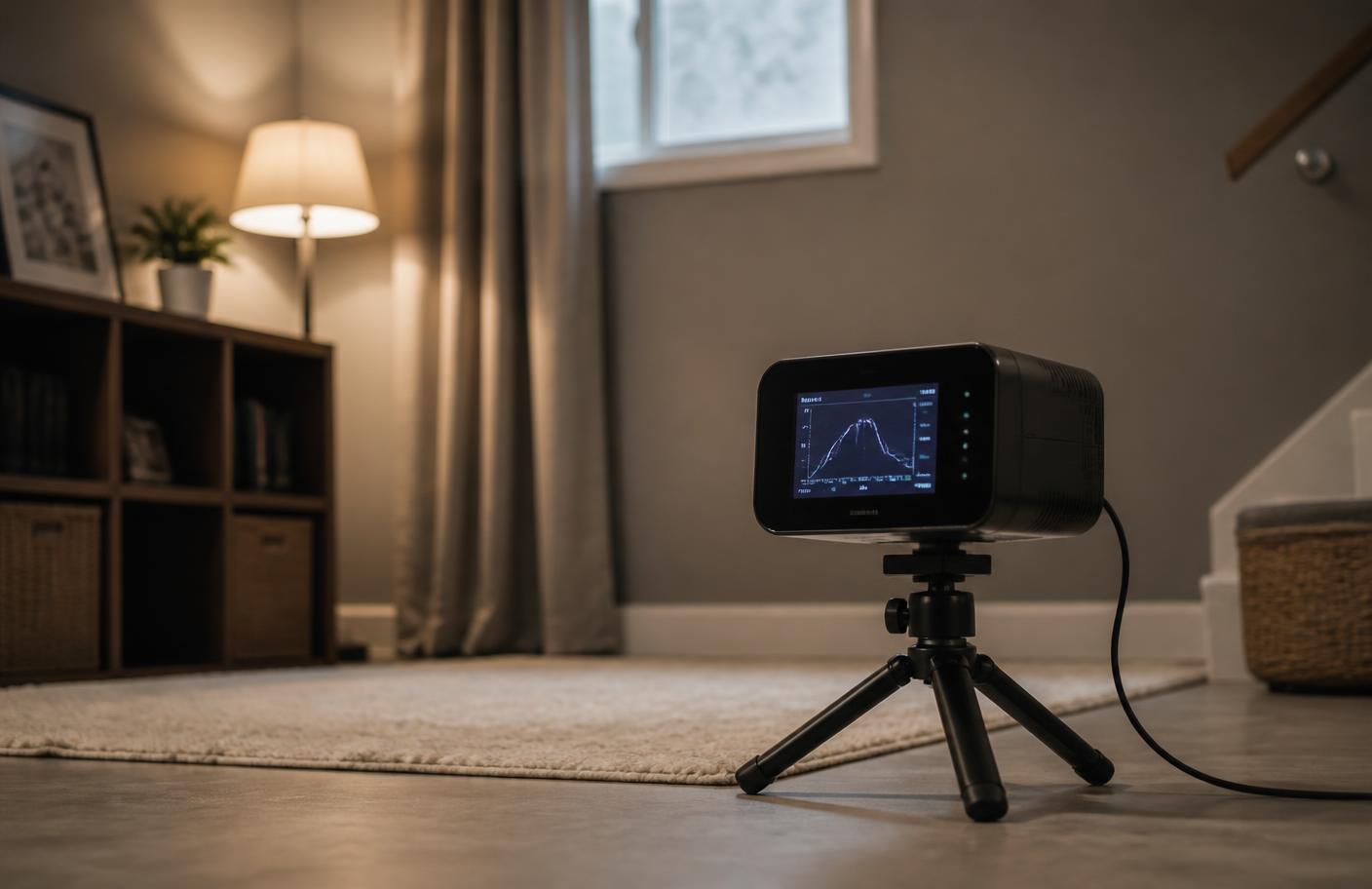
Combination foundations
Additions, walkouts and split levels create separate soil-contact zones that rarely respond to a single suction point. Multi-level homes near Geist are a frequent example.
Read more
Service area
Indianapolis and the surrounding counties
Marion, Hamilton, Hendricks, Johnson, Boone and Hancock Counties are all designated EPA Radon Zone 1. Each community page covers the housing stock, foundation patterns and testing considerations specific to that market.
Indiana resource center
Reference material, not sales copy
Our guides summarize public guidance, including the Indiana Department of Health radon program.
Indiana Radon Guide
The statewide pillar page: Indiana geology, risk factors, testing, mitigation and real estate in one reference.
Read moreIndianapolis Radon Guide
The Indianapolis metro pillar: neighborhood and township housing stock and what it means for testing and mitigation.
Read moreIndiana Radon Map Guide
How to read the EPA zone map and Indiana county designations, and the map's hard limits as a decision tool.
Read moreWhat To Do If Radon Levels Are High
A practical roadmap for homeowners who just received an elevated radon test result and want to know the next steps.
Read moreRadon Mitigation Cost
General mitigation cost ranges and the specific factors, from foundation type to fan placement, that influence pricing.
Read moreRadon Levels Explained
A clear explanation of radon measurement units, EPA's action level, and how to interpret a test result in context.
Read more
Answers
Radon questions we hear across Indianapolis
The EPA action level is 4.0 pCi/L, and the EPA also recommends considering a reduction system between 2 and 4 pCi/L because no level is considered risk-free. Marion County sits in EPA Radon Zone 1, so results at or above the action level are not unusual here. The decision should rest on a valid test performed under closed-house conditions, not on a neighbor's result.
Next step
Get a clear read on your property
Call or send the property details and we will tell you whether testing, mitigation or a service visit is genuinely the right next step.